
China’s Space Ambitions: The Bold Race to Catch SpaceX
In the fiercely competitive world of modern aerospace, SpaceX has redefined what humanity considers possible. Since its founding in 2002, Elon Musk’s company has transformed visionary ideas into tangible realities. Reusable rockets, unprecedented launch cadences, and ambitious goals reaching from low Earth orbit to Mars have positioned SpaceX as the global benchmark in innovation, cost efficiency, and operational audacity. Every Falcon 9 launch and Starship prototype test sends a clear message: SpaceX is rewriting the rules of the space game.
Yet across the Pacific, a daring challenger is rising. China, long a strategic competitor in space exploration, is now leveraging private companies as a central part of its cosmic ambitions. Among these, Ispace—officially Beijing Interstellar Glory Space Technology Company Limited—has emerged as a formidable contender. Supported by a combination of government investment and private capital, Ispace is accelerating its pursuit of technological parity with SpaceX. The stakes could not be higher: billions of dollars, national prestige, and technological supremacy hang in the balance.
China’s aerospace sector is evolving at an unprecedented pace. Traditionally dominated by the Chinese National Space Administration, the emergence of private startups like Ispace, Landspace, and Space Pioneer signals a new era. These companies are fueled by strategic investment, access to government resources, and a rapidly growing domestic space market. Every test flight, engine produced, and prototype developed is a tangible signal: China intends not only to participate in the space race but to compete at its highest levels.
Ispace has captured global attention with its Series D funding round, raising several hundred million yuan, equivalent to tens of millions of U.S. dollars. Led by the Sichuan provincial industrial fund, this investment follows previous funding rounds that have supported the development of the Hyperbola rocket series. Each investment carries more than monetary weight; it is a declaration of intent, ambition, and national pride, signaling China’s resolve to challenge the established space hierarchy.
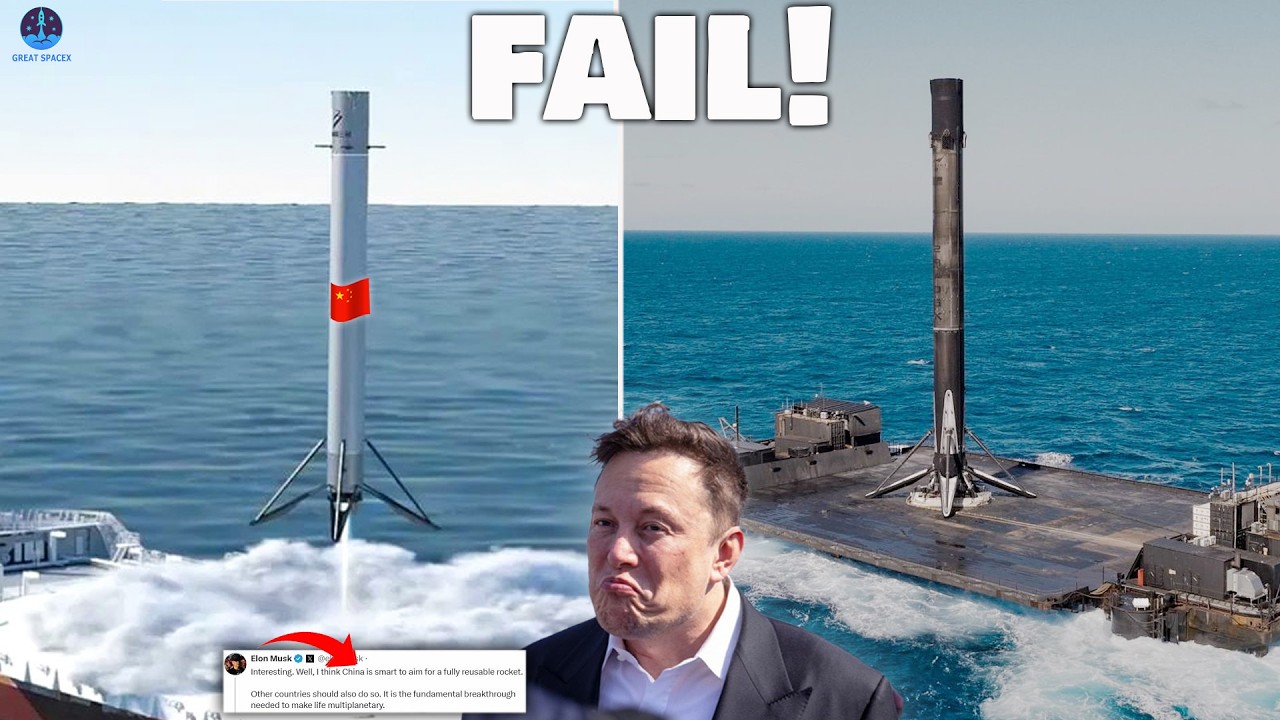
At the center of Ispace’s strategy is the Hyperbola 3 rocket, an audacious attempt to mirror the design philosophy of SpaceX. Hyperbola 3 runs on liquid oxygen and methane, reminiscent of the Starship program, and is powered by the Focus series engine. Standing at 69 meters tall, it bears a striking resemblance to the Falcon 9 while offering a payload capacity of 13.4 tons to low Earth orbit in expendable mode and 8.5 tons when reused. While these figures do not yet surpass the Falcon 9, the Hyperbola 3 is a bold technological statement: an attempt to blend imitation with innovation, and ambition with risk.
Ispace’s approach is methodical. Engineers have carefully selected elements from SpaceX rockets, integrating them into the Hyperbola 3 while simultaneously investing heavily in proprietary infrastructure and engine development. But replicating SpaceX is not merely a matter of copying dimensions or fuel types—it is about reproducing an ecosystem of efficiency, iterative design, and operational excellence. Even minor miscalculations can unravel months of planning and billions of dollars in investment. Every test flight carries enormous pressure, with success or failure poised to define the company’s reputation and China’s technological ambitions.
Infrastructure is a key pillar of Ispace’s strategy. A 35,000-square-meter facility in Sichuan is designed to produce up to 100 Focus engines annually, supporting a rigorous testing program capable of conducting up to 100 tests per year on 100-ton liquid rocket engines. This mirrors SpaceX’s vertically integrated model, where design, manufacturing, and testing operate in unison, accelerating learning cycles and innovation. Hyperbola 3’s debut is slated for December, with plans to attempt booster recovery reminiscent of Falcon 9 landings. If successful, a reusable test flight could follow as early as next June. The suspense is palpable: one successful launch could validate years of investment, while failure would underscore the unforgiving nature of rocketry.
Yet ambition comes with formidable challenges. Ispace has struggled with reliability in its previous rockets. The Hyperbola 1 series experienced four failures out of seven missions, underscoring the technical hurdles inherent in orbital launches. Introducing booster recovery adds another layer of complexity, requiring extreme precision and sophisticated engineering. The company’s strategy of combining features from multiple SpaceX designs carries risks of engineering incompatibility, which could further complicate development. The margin for error is slim, and the pressure to succeed is immense.
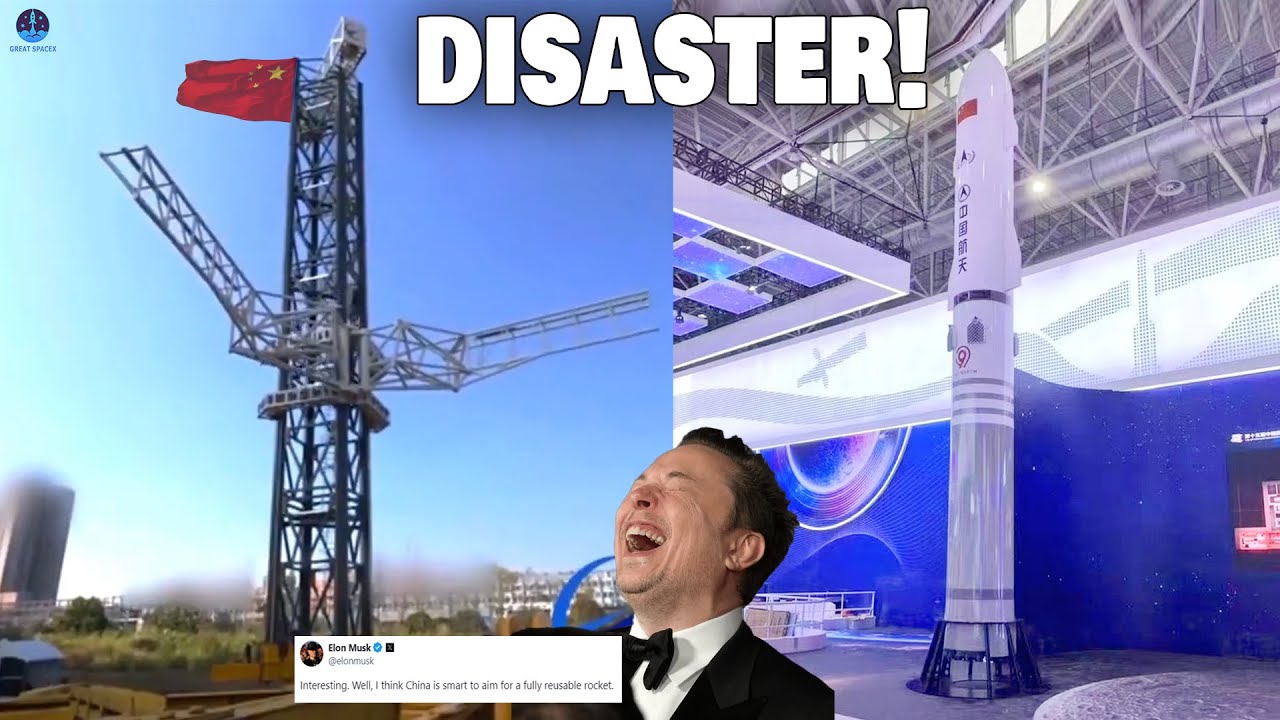
Ispace is part of a larger trend in China’s private space industry. Landspace recently made headlines as the first Chinese private company to reach orbit with a methalox-powered rocket, while Space Pioneer is developing vehicles strikingly similar to the Falcon 9. These startups benefit from a combination of state funding and private investment, allowing rapid scaling and technological advancement. Yet history demonstrates that imitation alone is insufficient. SpaceX’s achievements were hard-won through repeated failure, relentless iteration, and a culture that embraces risk. Chinese firms must navigate technical challenges and operational hurdles, where a single misstep could have catastrophic consequences.
Understanding SpaceX’s trajectory offers critical insight. The company’s first three Falcon 1 launches failed, nearly derailing Musk’s vision. But the ability to absorb risk, learn quickly, and iterate rapidly allowed SpaceX to transform failure into progress. Vertical integration across engines, software, design, and manufacturing created efficiencies that competitors struggled to match. Hyperbola 3 cannot simply replicate dimensions or fuel—it must replicate a culture of innovation, a learning ecosystem, and the relentless pace that propelled SpaceX to the forefront.
Government support amplifies both opportunity and pressure. Funding, access to infrastructure, and policy backing allow Chinese startups to scale quickly, hire elite engineers, and pursue ambitious R&D programs. Yet with billions at stake, every failure is magnified. The weight of national expectation is palpable: success is demanded, not optional.
Globally, private Chinese aerospace companies are entering a crowded and competitive arena. Blue Origin, Rocket Lab, Relativity Space, and established aerospace giants are all intensifying competition. To remain relevant internationally, Ispace must demonstrate not only technological parity but also operational reliability, cost efficiency, and a capacity to sustain high-frequency launches. Every test flight is observed worldwide, with outcomes influencing both market perception and geopolitical strategy.

Experts offer measured but cautious optimism. Dr. Li Wei, a space technology specialist in Beijing, explains: “Government backing and private investment provide a strong foundation, but rocket engineering is unforgiving. One flaw can undo years of work.” Western observers highlight the strategic stakes: reusable rocketry and heavy-lift capabilities are critical not only for commercial success but also for establishing technological parity with the United States. The pressure is intense, the scrutiny global, and the potential reward immense.
The next decade will be decisive. Hyperbola 3 embodies opportunity and risk: a successful reusable test flight could herald China’s emergence as a major private space player, while failure would underscore the difficulty of replicating SpaceX’s achievements. Matching SpaceX requires more than technology; it demands iterative design, operational cadence, a culture that embraces failure, and relentless pace. China possesses the resources and ambition, but translating ambition into sustainable capability is the ultimate challenge.
As the global space race unfolds, Ispace and its peers are no longer passive observers—they are active competitors seeking to challenge SpaceX on the world stage. Billions of dollars, cutting-edge technology, national prestige, and human ambition converge in this cosmic contest. The next Hyperbola 3 launch will not merely test a rocket—it will test strategy, innovation, and audacity. The stakes have never been higher, and the eyes of the world are watching.
The quest for aerospace excellence is far from over. Tension, stakes, and drama are palpable. As billions of dollars, cutting-edge engineering, and national pride collide in this high-stakes competition, one truth is undeniable: in this race, every second, every launch, and every decision counts.
News

Un padre regresa del ejército y descubre que su hijastra ha sido obligada por su madrastra a hacer las tareas del hogar hasta sangrar, y el final deja horrorizada a la madrastra.
Después de dos años lejos de casa, tras días abrasadores y noches frías en el campo de batalla, el Capitán…

Una niña de 12 años hambrienta pidió tocar el piano a cambio de comida, y lo que sucedió después dejó a todos los millonarios en la sala asombrados.
Una niña de doce años hambrienta preguntó: “¿Puedo tocar el piano a cambio de algo de comida?” Lo que sucedió…

Se rieron de ella por almorzar con el conserje pobre, pero luego descubrieron que él era el director ejecutivo de la empresa.
Se rieron de ella por compartir el almuerzo con el conserje pobre, hasta que descubrieron que él era el director…

La multimillonaria soltera se arrodilló para pedirle matrimonio a un hombre sin hogar, pero lo que él exigió dejó a todos conmocionados.
“Por favor, cásate conmigo”, suplicó una madre soltera multimillonaria a un hombre sin hogar. Lo que él pidió a cambio…

Nadie se atrevía a salvar al hijo del millonario, hasta que apareció una madre pobre sosteniendo a su bebé y una acción temeraria hizo llorar a todos.
Nadie se atrevía a salvar al hijo del millonario, hasta que una madre negra y pobre que sostenía a su…

Un maestro escuchó el aterrador susurro de un niño y los descubrimientos de la policía dejaron a todos sorprendidos.
Un Maestro Escuchó a un Niño Susurrar “Esta Noche Me Voy a Escapar Antes de Que Él Me Encuentre” y…
End of content
No more pages to load